Understanding AODA

The Problem
Ontario businesses and organizations must comply with AODA, but many lack understanding of the Act’s main goal and specific requirements. In this clinic’s case, compliance gaps have led to inaccessible environments for individuals with disabilities, affecting business operations and inclusivity.
The Solution
After analyzing the problem, I proposed a multi-faceted learning experience. The goal is to empower learners to implement AODA standards effectively, creating an inclusive environment and optimizing processes.
This course includes:
Interactive multimedia modules covering key AODA provisions.
Quizzes and knowledge checks to reinforce learning.
Additional resources to support practical application.
Specific goals: Learners correctly answering 100% of the questions in the quiz. In addition, the post-class survey results revealing a participant satisfaction rating of at least 90%.
Theories Applied: Universal Design for Learning, and the ADDIE model.
This eLearning course on the Accessibility for Ontarians with Disabilities Act (AODA) is designed to equip learners with the knowledge needed to create inclusive environments and meet accessibility standards.
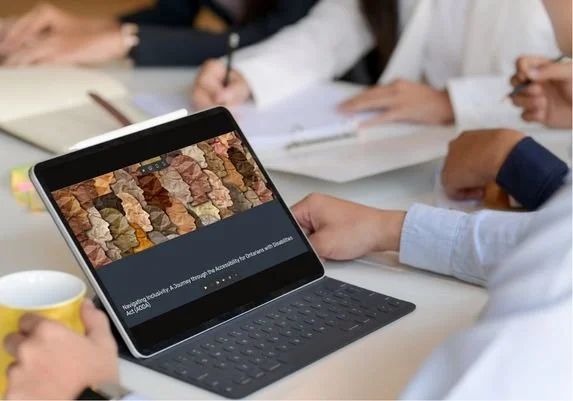
Audience
This e-learning course was designed for staff and therapists of a multidisciplinary therapy clinic based in the GTA.
Tools
Adobe Captivate, Canva, Voicemaker, Google Suite
Responsabilities
I led the end-to-end development of this project, from initial concept to final execution. Responsibilities included instructional design, content development, visual and graphic design, and LMS integration.
My Process
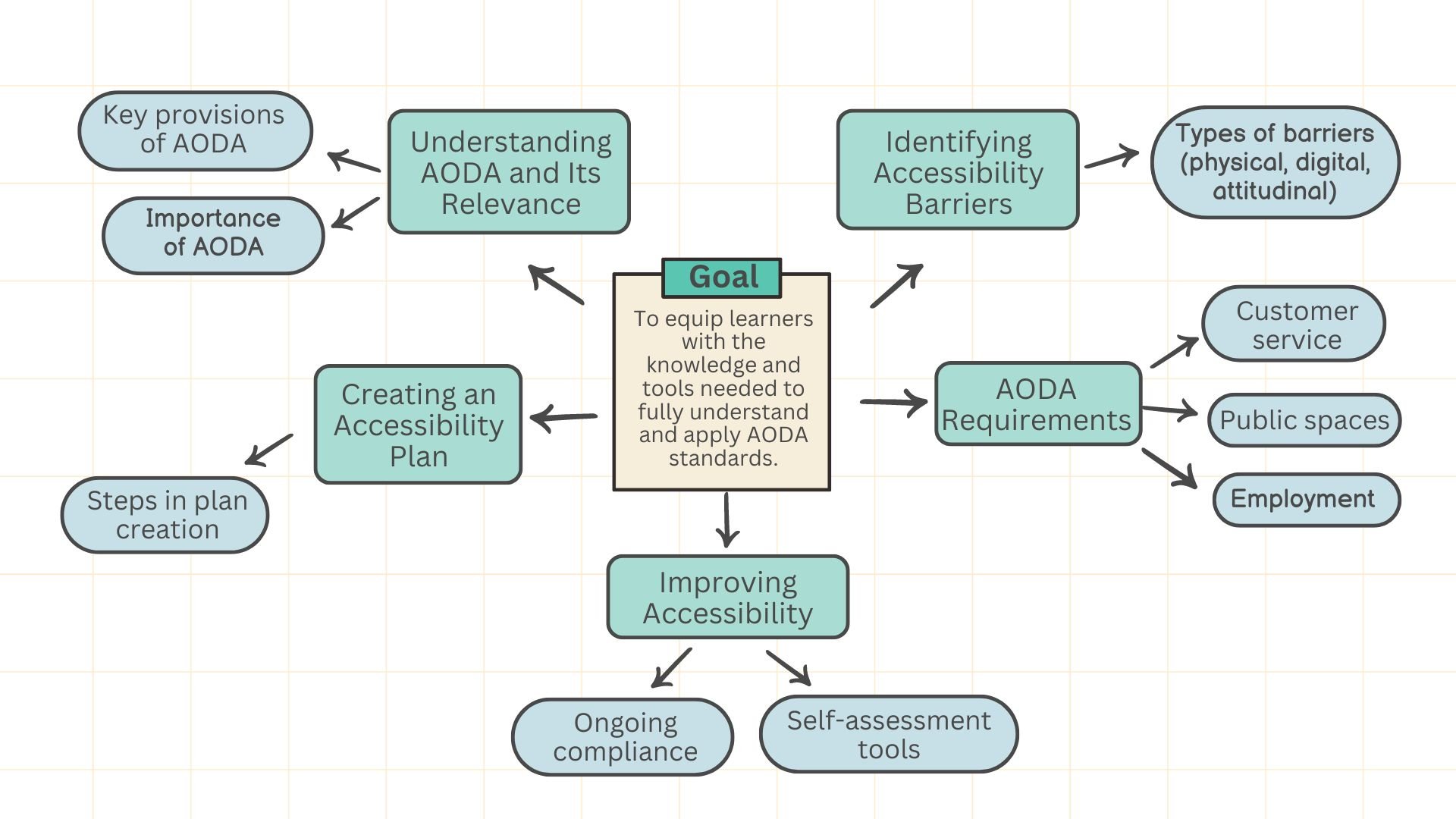
Action Map
As the Subject Matter Expert (SME), I developed an action map based on AODA’s core standards, highlighting crucial actions for creating accessible environments. Each task was connected to a measurable goal, such as ensuring learners achieve a 100% score on quizzes. The action map guided the design of practical learning activities.
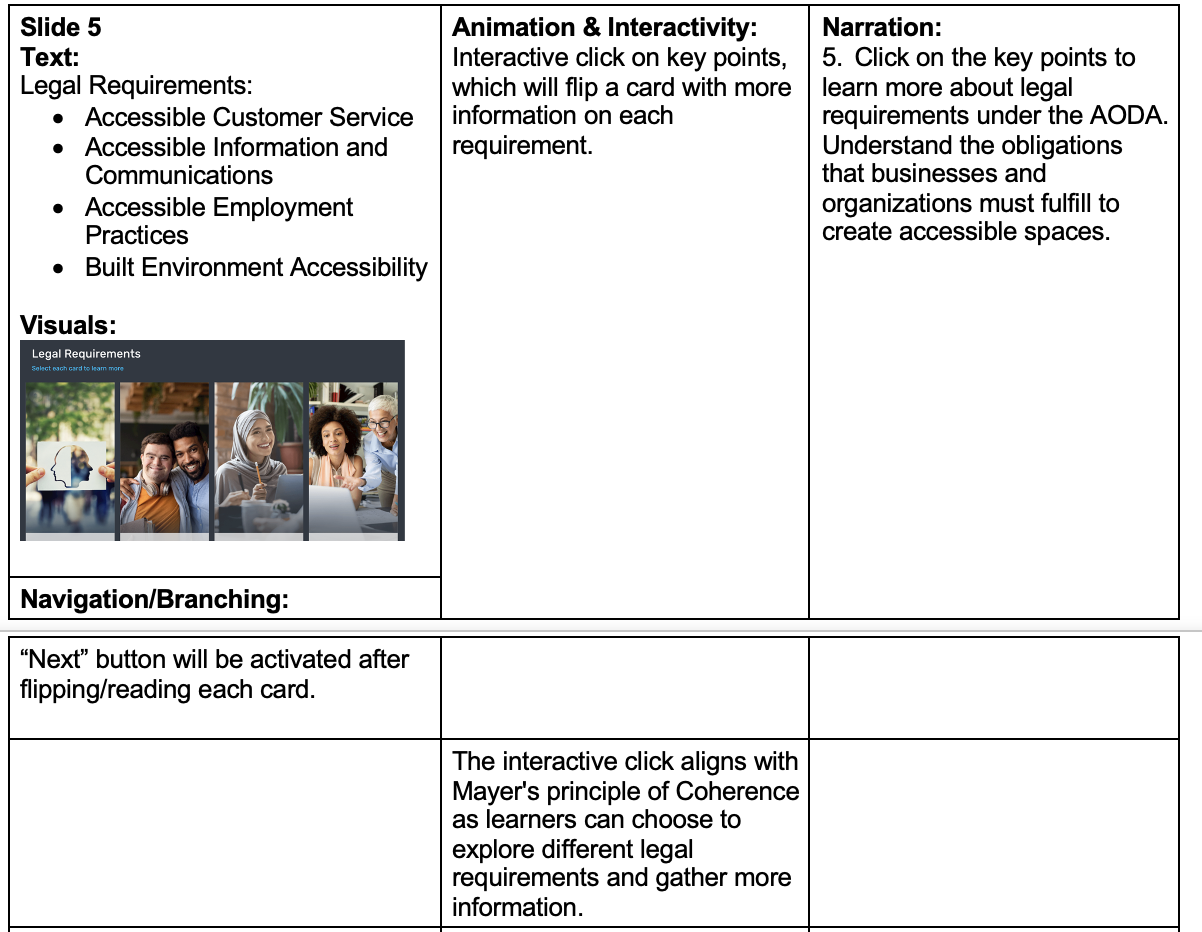
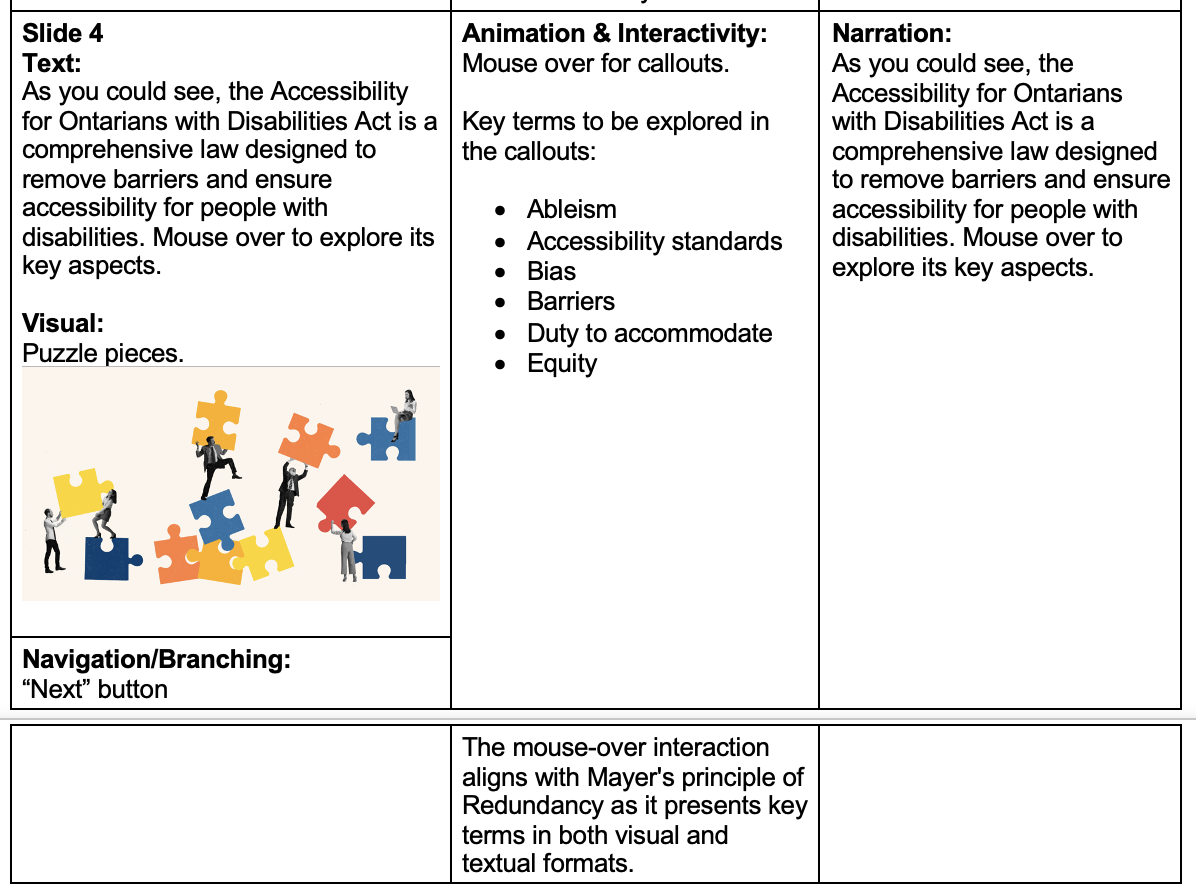
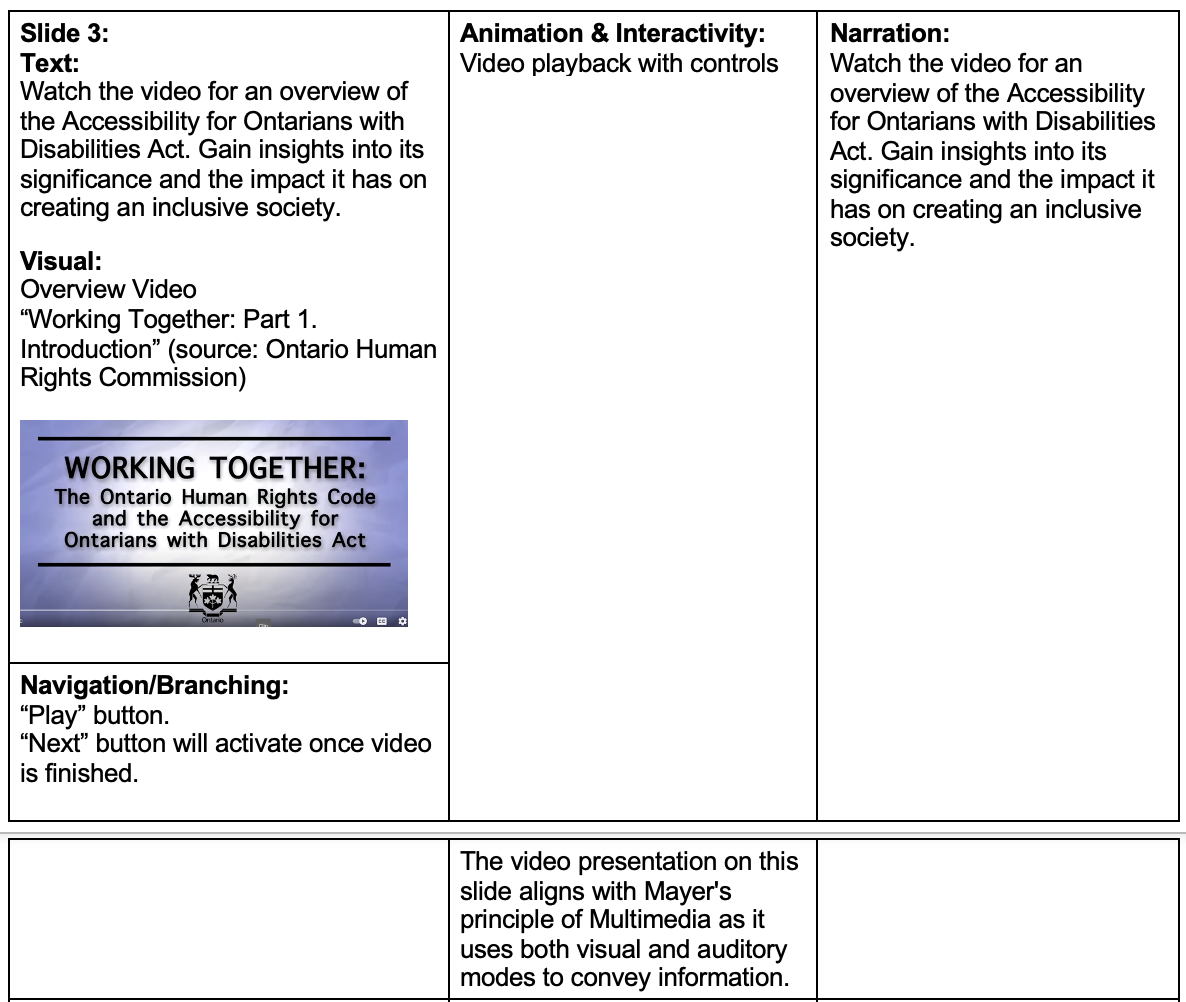
Text-based Storyboard
The storyboard focused on delivering AODA concepts through engaging scenarios and relatable case studies. I incorporated quizzes and interactive elements to test learners' understanding and keep them engaged. The content was reviewed and refined through multiple iterations.
Interactive Prototype
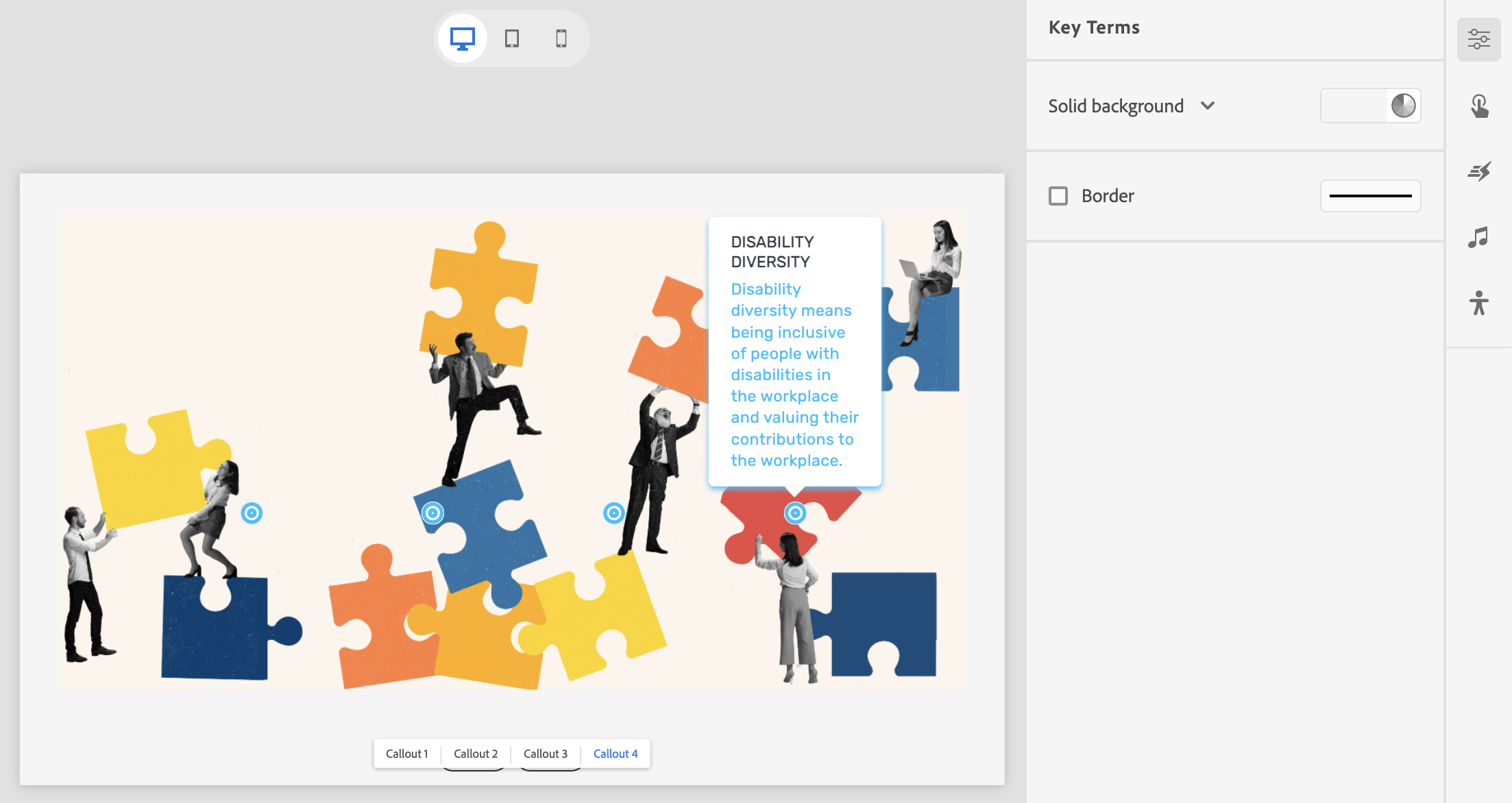
After designing mockups, I proceeded to develop a limited prototype in Adobe Captivate showcasing the first module’s interactive features and multimedia content. Feedback gathered during prototype testing helped refine the course structure and interactivity before full-scale development. that adhered to accessibility principles. A consistent style guide ensured an accessible and user-friendly design for all learners.
Full Development
After addressing all feedback, I developed the complete eLearning course in Adobe Captivate, focusing on delivering an immersive learning experience. The course’s responsive design ensures accessibility across all devices, meeting both AODA and instructional design standards.
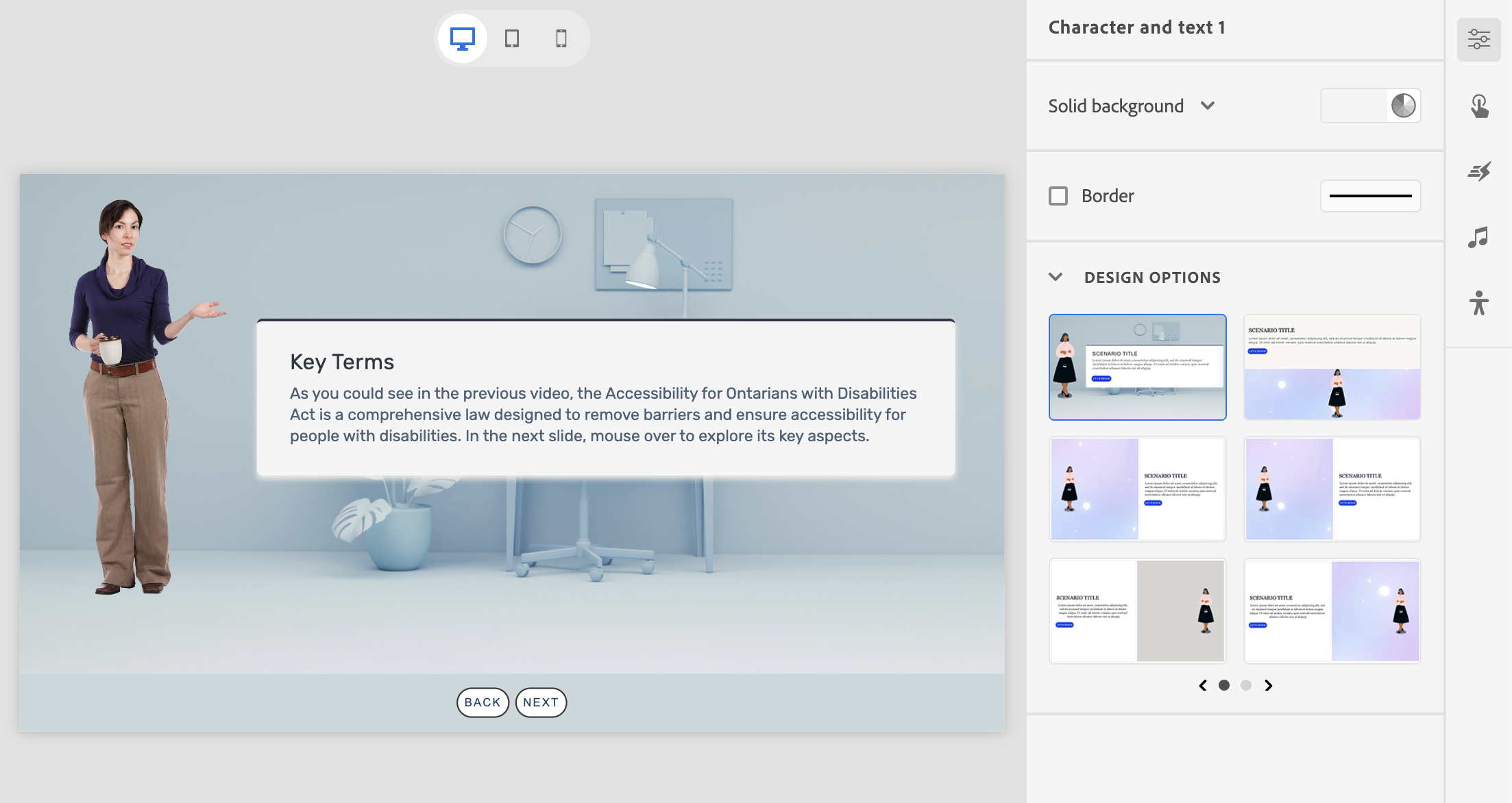
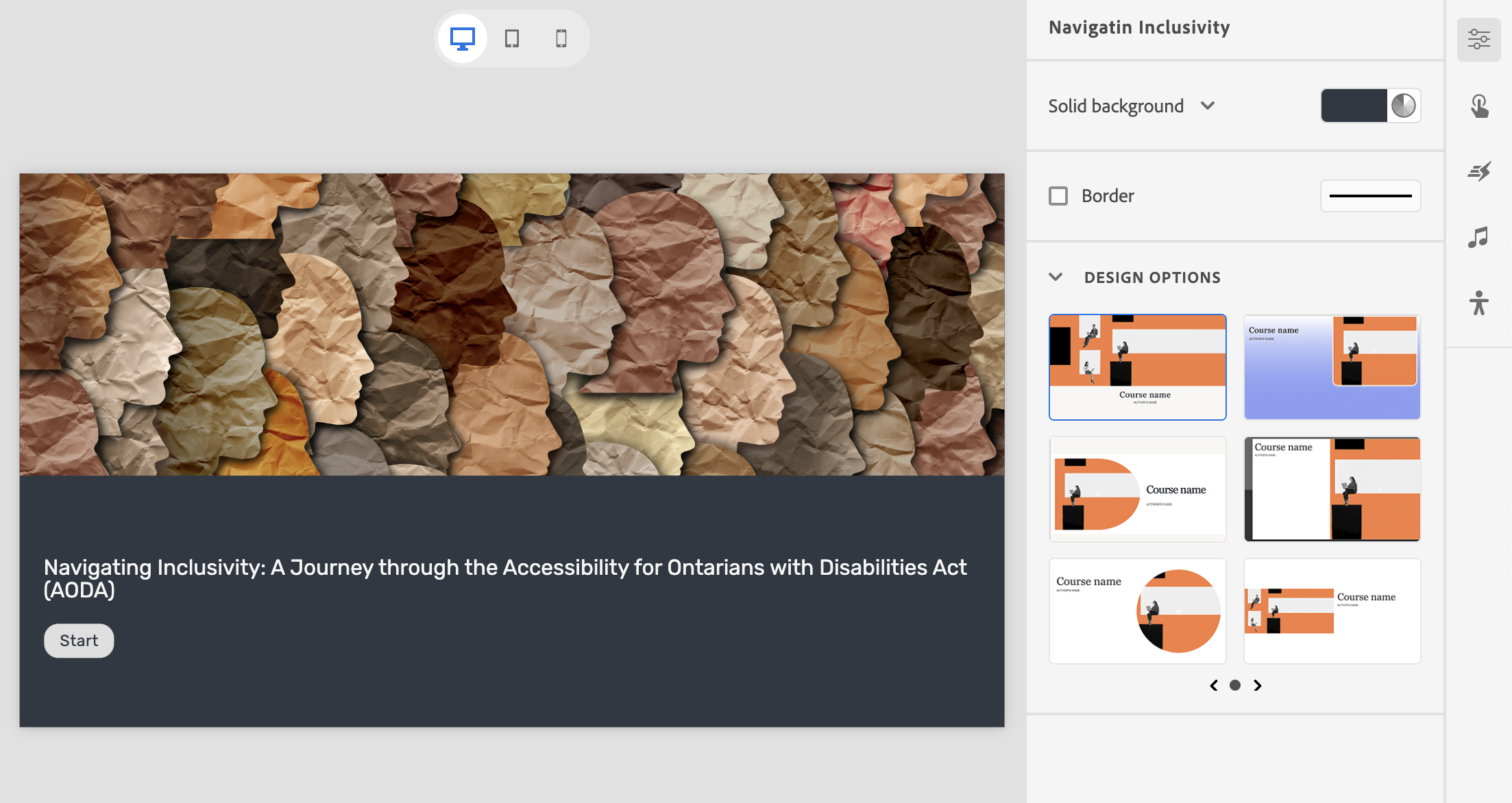
I began by defining clear learning objectives and structuring the course using the ADDIE model and Universal Design for Learning. I then created detailed storyboards, visual mockups, and an interactive prototype to ensure alignment with the learning goals.